The short answer: a newborn who will only sleep while held is completely normal — not a bad habit, and not something you caused. For the first few months (often called the "fourth trimester"), babies are biologically wired to feel safest against a caregiver, where there's warmth, movement, and a heartbeat. It gets easier as they mature, and there are gentle ways to help them settle in their own safe sleep space.
Why newborns want to be held to sleep
Your baby spent nine months in a warm, snug, constantly moving place with your heartbeat as the soundtrack. A flat, still, quiet crib is the opposite of everything they know. Being held recreates the womb — so wanting contact isn't manipulation or a habit gone wrong. It's instinct, and it's how newborns feel safe enough to let go into sleep.
You are not spoiling your baby by holding them. You cannot spoil a newborn.
Gentle ways to help them settle in their own space
The goal is to recreate enough of that womb feeling that the crib feels safe too:
- Swaddle (until they show any signs of rolling) to recreate the snugness and calm the startle reflex.
- Consistent sound. A steady, womb-like soundscape at every sleep bridges the silence a newborn finds unsettling and becomes a familiar cue.
- Warm the sleep surface slightly before you lay them down (with your hand, never a loose heat source) so the temperature change doesn't jolt them awake.
- Lay them down drowsy but not fully asleep when you can, so they get practice settling in the crib — even a few seconds of it builds the skill.
- Wait for deep sleep before a transfer: loose limbs and an open hand mean they're deep enough to move.
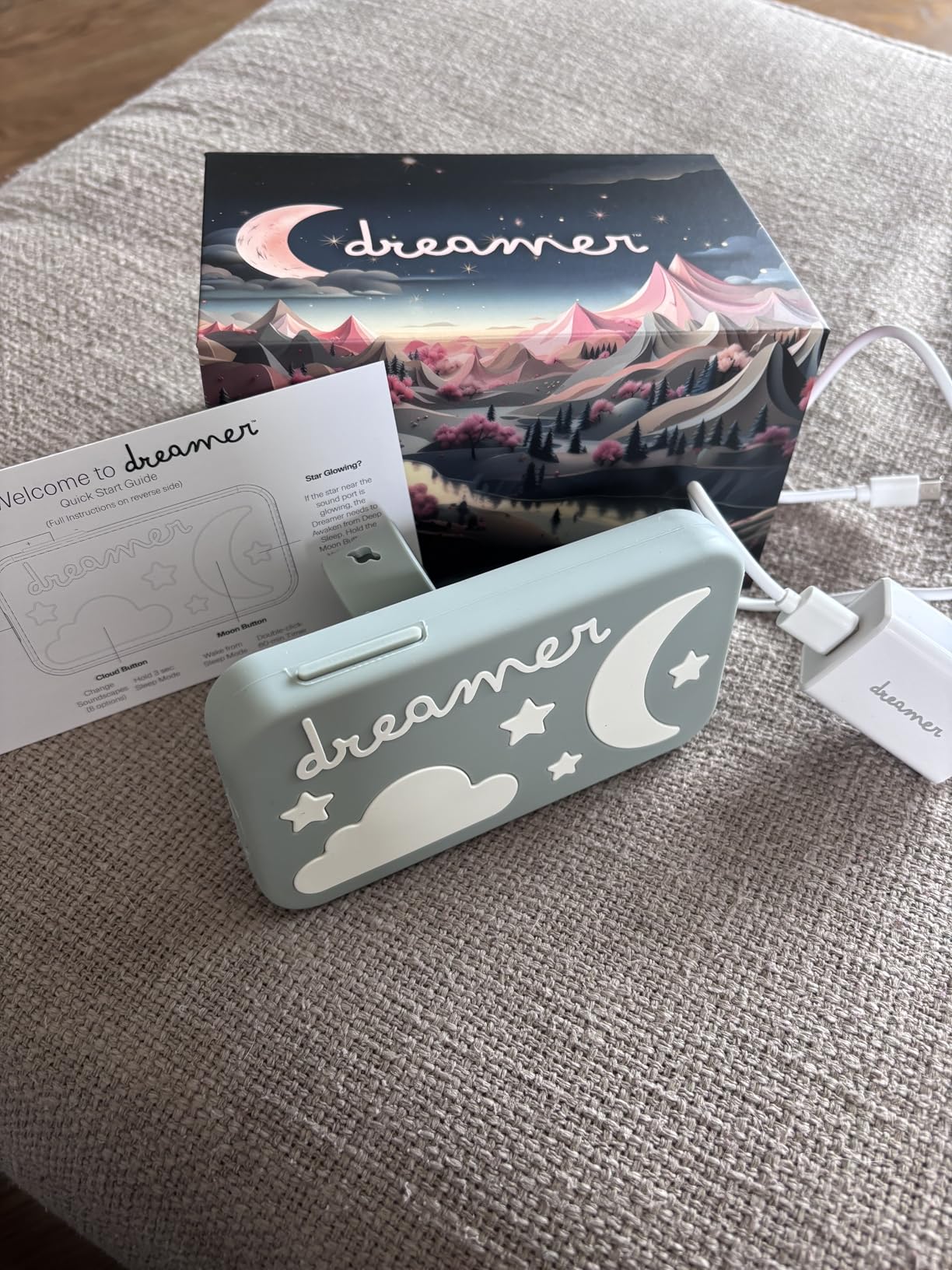
A consistent sound cue is one of the simplest of these to keep identical night after night — it's part of why we designed Dreamer with steady, frequency-tuned soundscapes and an 18-hour battery. Keep the volume around 50 dB or below and place it across the room; here's the safe-volume guide.
Safe sleep comes first
However tempting it is at 3am, the American Academy of Pediatrics is clear: for every sleep, place your baby on their back, on a firm flat surface, alone in their own crib or bassinet, with nothing loose in it. Contact naps while you are awake and supervising are fine — the real risk is falling asleep together on a couch, chair, or adult bed. When you need to sleep, your baby should be in their own safe space.
Frequently asked questions
Am I creating a bad habit by holding my newborn to sleep?
No. In the newborn stage, contact is a biological need, not a habit. As your baby matures, gentle practice in their own sleep space helps them learn to settle independently.
Why does my baby wake the moment I put them down?
Often it's a too-early transfer (they weren't in deep sleep yet) or the sudden change in temperature and surroundings. Waiting for loose limbs and warming the surface first both help.
When will my baby sleep without being held?
It varies, but many babies settle more easily as they move out of the fourth trimester (around 3–4 months) and their sleep matures. Consistency speeds it along.
Written by Josh Bronfman, Certified Sleep Science Coach and founder of Dreamer. General information, not medical advice — talk with your pediatrician, and follow AAP safe-sleep guidance.