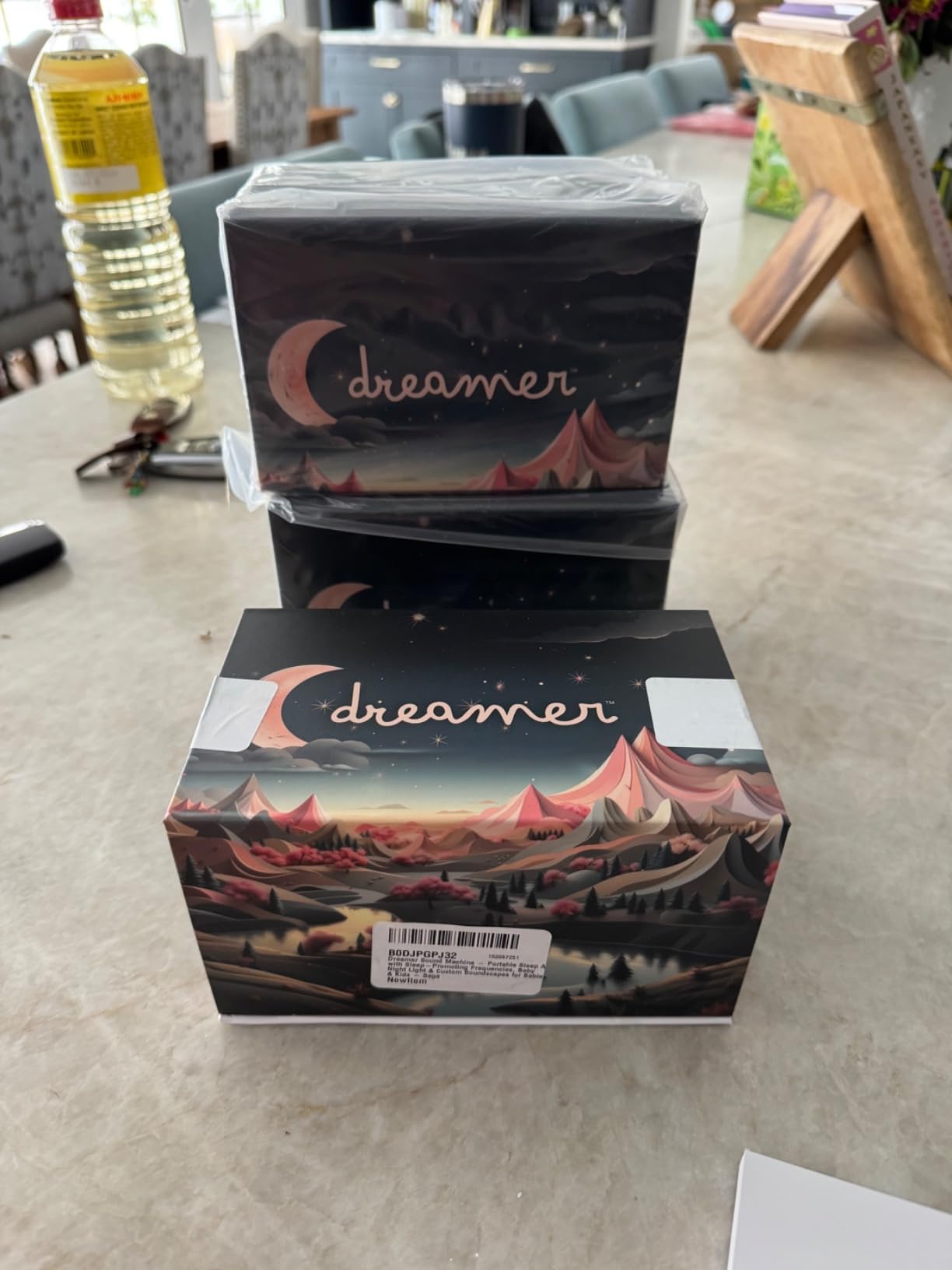
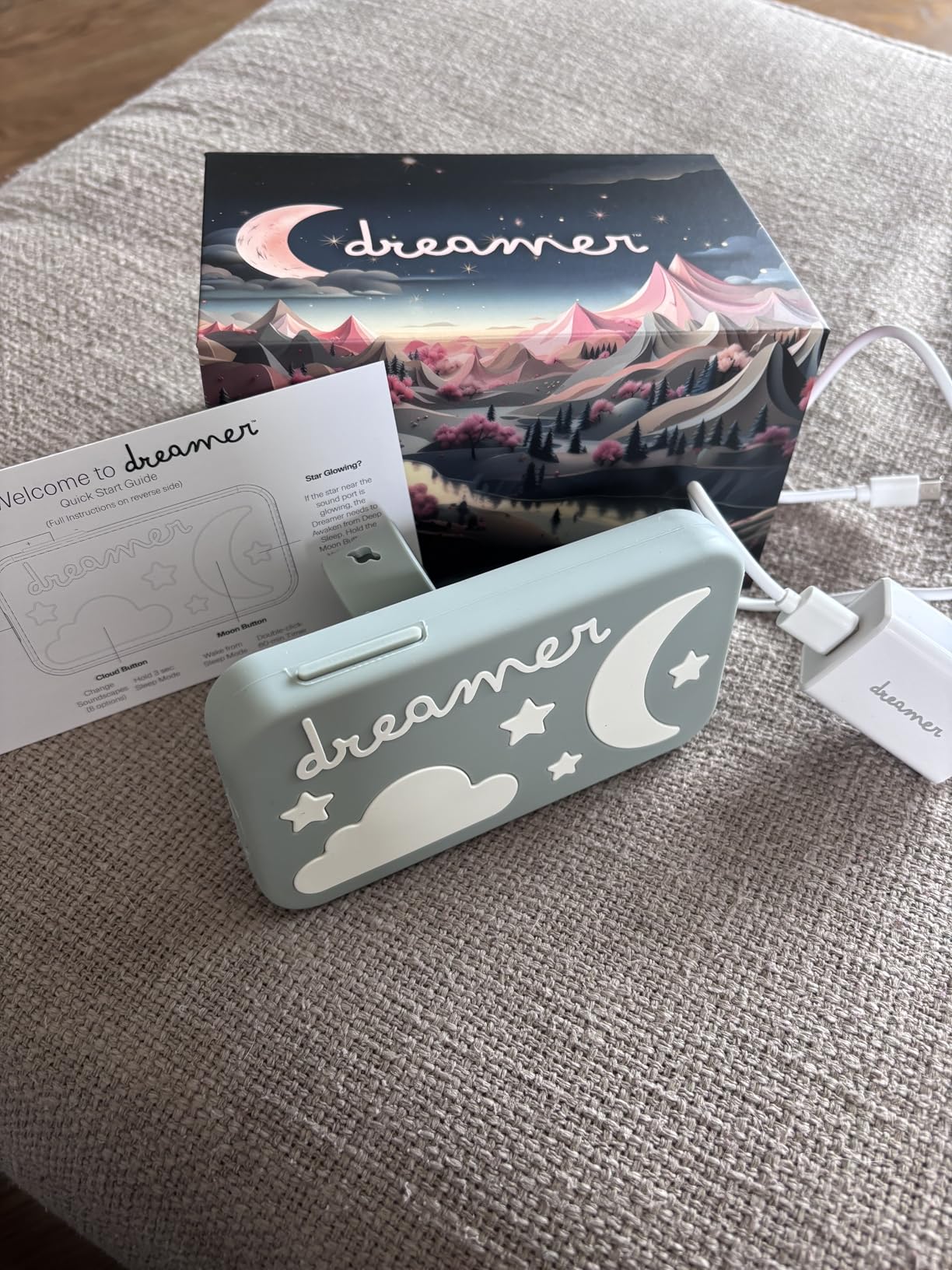
What we know about how audio frequency interacts with the autonomic nervous system — and where the evidence runs out.
By Josh Bronfman, Certified Sleep Science Coach and founder of Dreamer
When I tell people Dreamer is engineered around 432Hz, the natural follow-up is some version of: "But why that number? Isn't sound just sound?"
It's a fair question, and it deserves a fair answer — including the parts that don't help me sell anything. This article walks through what the research actually shows, what it doesn't, and why we made the design choice anyway.
This is the second in our science series. The first, Frequency-Tuned Audio vs. White Noise, laid out the two different things a sound machine can do: masking and something closer to regulation. This one goes deeper on the second, and is more careful about how much we can claim.
The short version, before the detail
Sound masking is well established. Steady background sound covers the intermittent noise that pulls a baby out of light sleep, and that accounts for most of the benefit any sound machine provides.
The idea that specific frequencies produce distinct physiological effects is a live research question with some interesting early findings and a small evidence base. It is not settled. If you want the honest bottom line, that's it — the rest of this article is why the question is interesting anyway.
Two nervous system states
Every human nervous system runs on a balance between two states: sympathetic (fight-or-flight) and parasympathetic (rest-and-digest). In babies especially, the balance tips back and forth many times an hour.
Sleep is difficult in the sympathetic state. Heart rate is faster, breathing shallower, attention outward. To fall asleep and stay asleep, a baby needs to settle toward the parasympathetic side.
Most parents intuit this without the vocabulary. The reason rocking works, the reason a parent's heartbeat against the chest works — these inputs signal safety rather than simply covering noise.
The question is whether a specific audio frequency can do something similar. That's what researchers have started to test.
How researchers measure this
Heart rate variability — the beat-to-beat fluctuation in heart rhythm — is the most common external proxy for autonomic state. Higher HRV generally indicates a more parasympathetic state; lower HRV indicates sympathetic dominance. It's imperfect, but it's measurable, which is what makes experiments possible.
Some of the framing you'll encounter in this area — including claims about the middle ear muscles biasing which frequencies we hear based on perceived safety — comes from Stephen Porges's polyvagal framework. It's an influential model and it's the origin of a lot of popular writing about the vagus nerve. It's worth knowing that it's a theoretical framework with published scientific criticism, not established anatomy. I find it a useful lens. I'm not going to present it to you as settled fact.
What the 432Hz pilot study found
In 2019, Calamassi and Pomponi published a double-blind cross-over pilot study in EXPLORE. They tested whether the same musical piece tuned to 432Hz versus 440Hz (standard concert pitch) produced different physiological responses.
What they reported:
- Heart rate decreased more while listening at 432Hz than at 440Hz
- Systolic and diastolic blood pressure both dropped more at 432Hz
- The shift toward parasympathetic dominance was stronger at 432Hz
Same piece, same volume, same listener. The only variable was a 1.8% difference in pitch.
The important caveats. This is a pilot study, with a small sample, in adults, measuring short-term physiological markers rather than sleep outcomes. It has not, to my knowledge, been replicated at scale. It does not establish that 432Hz improves sleep, and it certainly doesn't establish anything about infants specifically.
What it does suggest is that the autonomic nervous system may respond differently to specific frequencies in ways unrelated to conscious preference. That's an interesting result worth following. It is not a finished answer.
What about 528Hz?
You'll find 528Hz cited alongside a 2018 study reporting reduced cortisol and increased oxytocin after five minutes of exposure. I've cited it myself in the past, and I want to be straightforward with you: that study was published in a journal whose publisher has a weak reputation for peer review. I'm not comfortable presenting it as evidence, so I'm not going to.
528Hz is in Dreamer because of its tonal character — it sits in a range that produces a warmer, rounder sound than broadband white noise. That's a design and acoustics decision, not a claim about hormones.
Why we built it this way anyway
Given all those caveats, why engineer around specific frequencies at all?
Because the alternative most machines offer is a short loop of broadband static, and broadband static is harsh. Dreamer's soundscape is engineered, repeatable, and loop-free, and it sounds materially different — lower, warmer, less hissy. Parents notice that at 3am. That's a real benefit that doesn't require any contested science to justify.
If the frequency research firms up over the coming years, we'll have built the right thing. If it doesn't, we've still built a better-sounding machine. I'd rather tell you that than overstate the case.
What the evidence does not show
- That 432Hz audio resolves infant sleep problems
- That every baby responds the same way
- That frequency-tuned audio substitutes for the things that actually matter most — a consistent routine, a safe sleep environment, appropriate feeding
If anyone tells you a specific frequency is clinically proven to make babies sleep, they are ahead of the evidence. Including us, if we ever do.
What to do in practice
- Use it consistently for bedtime and naps, not only when things are going badly. Predictable cues are the mechanism with the best support behind it.
- Keep the volume gentle. This matters more than which machine you buy. Hugh et al. (2014), published in Pediatrics, found many infant sound machines can produce hazardous sound pressure levels at close range and high settings. Place it away from the crib and use the lowest setting that masks household noise.
- Start it before bedtime, not at the moment of crisis. Wind-down cues work better than emergency buttons.
- Keep light warm and dim at night. Avoiding short-wavelength light in the evening is one of the better-established pieces of sleep science, and it's why Dreamer's night light is amber only.
Where to go next
If you want the practical version rather than the science, our free guide The First 90 Nights covers what actually helps a newborn sleep — including a safe sleep section worth reading before anything else.
And if you've made it this far into an article about the autonomic nervous system that spends most of its length telling you what we can't claim, you're exactly the kind of parent we built Dreamer for. Welcome.
Try Dreamer for 90 nights. If it isn't working for your baby, send it back and we'll pay return shipping. See the full money-back policy.
References
- Calamassi, A., & Pomponi, G. P. (2019). Music tuned to 440 Hz versus 432 Hz and the health effects: A double-blind cross-over pilot study. EXPLORE, 15(4), 283–290. Pilot study, small sample, adult participants.
- Hugh, S. C., et al. (2014). Infant sleep machines and hazardous sound pressure levels. Pediatrics, 133(4), 677–681.
- Porges, S. W. (2011). The Polyvagal Theory. W. W. Norton & Company. Theoretical framework; see published critiques for counterarguments.